

Champagne, an exceptional product for exceptional evenings ... Or not!
At this end of the year, and although a cook, I had to talk about Champagne... Passionate about know-how and local products, Champagne was therefore the ideal candidate for the end of the year!
When the wine becomes Champagne ...
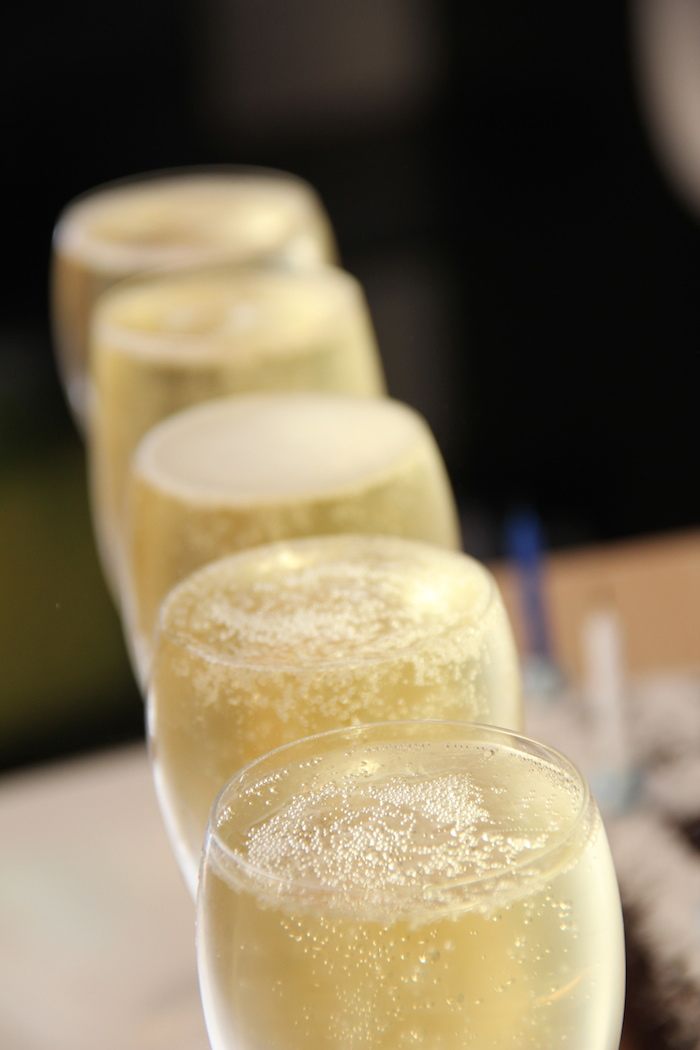
Bubbles!
Champagne is a little the exception that confirms the rule. Indeed, its elaboration is so specific that it cannot be copied or reproduced in any other region!
In a few words: Champagne winemakers produce a "quiet" wine which becomes "foamy" after the intervention of their know-how which passes through various very specific stages, a certain time of aging and compliance with multiple criteria laid down by the appellation...
Then we understand why we have to pay a certain price to be able to offer these nice fine bubbles!
My advice to make your choice:
It is true that it is quite difficult to find yourself in the midst of all this choice, all these houses (also called "brand") and so many other information sometimes incomprehensible! It is important to know that some well-known houses or brands are not necessarily synonymous with quality ...
Here are some information you might be interested in:
Council 1
Choose the type of cuvée: one Cuvée Prestige or Cuvée Millésimee will be of better quality than a Cuvée "normal". Here are some examples of prestige cuvée: Dom Perignon for the house Moët & Chandon, the Counts of Champagnes for the house Taittinger, the Grand Lady for the house Widow Clicquot Ponsardin etc...
Attention:
– One White White is not necessarily synonymous with quality, it just means that it comes exclusively from white grape with white skin either CHARDONNAY.
– One Rosé is made from the addition of red wine in white wine until obtaining the desired color (this is the only name that has the right to this practice, in the other regions, the rosy wine is obtained by pressing of red grapes)
Council 2
The type of Champagne is attarded and chosen according to its tastes: Gross (less than 15 gr of sugar/litre),Extra-Dry (between 12 and 20 gr of sugar/litre), the Dry (between 17 and 35 gr of sugar / liter), Half-sec (between 35 and 50 gr of sugar / liter) and the Sweet (more than 50 gr of sugar/litre!)
Council 3
We take a look at the mention that appears on a small corner of the label and that, in my opinion, is an important criterion because it provides information on the "professional category of the designer", namely:
- RM : Manipulant harvester = he harvests the grapes and develops the wines and champagnes himself 🙂
- NM : Manipulant trader = he buys grapes or musts or wines then develops Champagne himself 🙂 !
- RC: Harvesting Co-operator = Idem NM but in the form of a cooperative
- CM : Coopérative de Manipulation = it produces cuvées and wines from grapes of its adherents
- SR: Society of Harvesters = production of cuvées from the grape harvest of the various members of this company
- ND: Dealer Distributor = he buys bottles ready and sticks his label on it!!! 🙁
- A: Harvesting = he is neither manipulating nor cooperator but harvests his grapes and has his wines made by a NM ...
- MA : Auxiliary mark = this is a brand that belongs to a customer which makes the cuvées by a professional ... 🙁
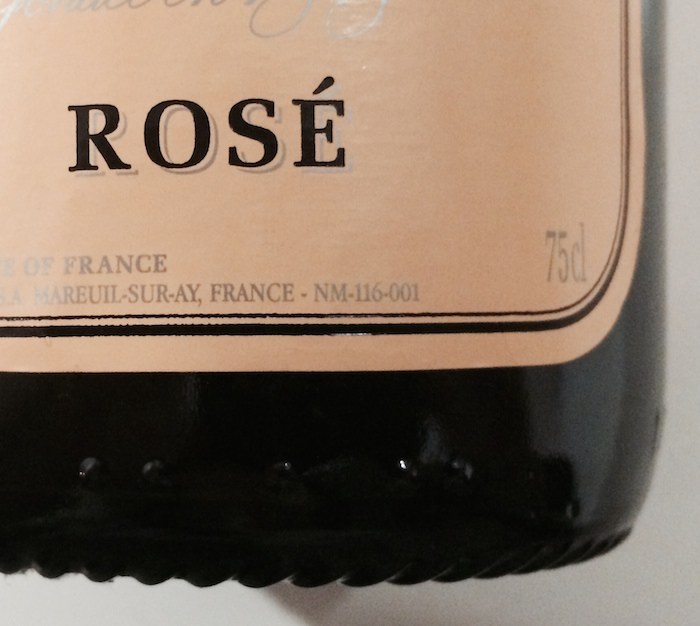
NM
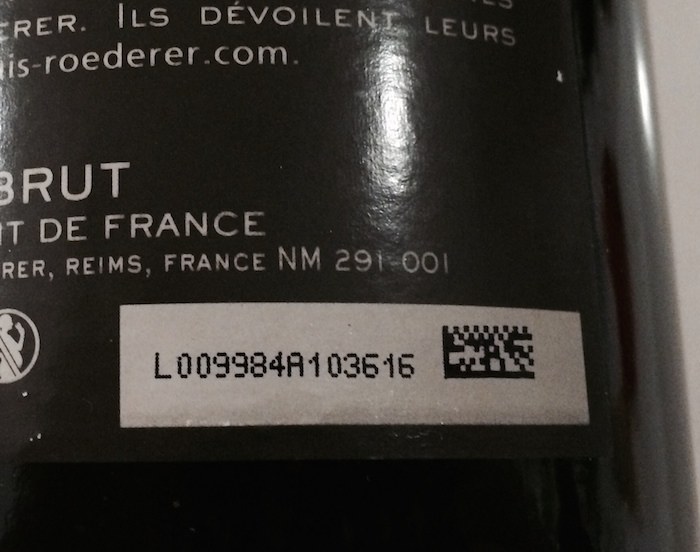
NM
Council 4
Attention is also paid to references Grand Cru or First Cru which are generally quality guarantees. This means that the grapes used to make the wines come from a single municipality. These communes are usually mentioned on the label. For the big wines there are 17 of which the best known are Ay, Avize, Oger, Cramant, Mailly, Verzenay, Bouzy …
Council 5
The greater the capacity of the bottle, the better! According to the experts, the quantity would influence the quality... A half bottle would be less good than a bottle, a bottle would be less good than a magnum etc ... Then let go!
The different capacities: Quart (20cl) " Half Bottle (37.5cl) " Bottle (75cl) " Magnum (150cl) " Jeroboam (3L) " Rehoboam (4.5L) " Mathusalem (6L) " Salmanazar (9L) " Balthazar (12L) " Nebuchodonosor (15L) " ...
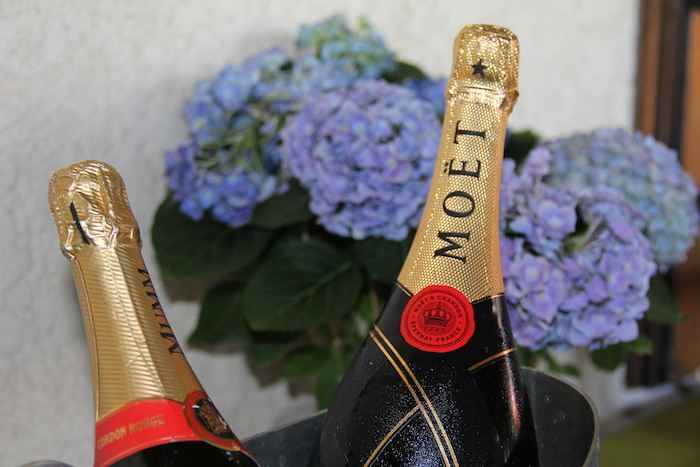
Moët & Chandon Brut
Champagne "to all sauces"
It is true that a good Champagne is enough for itself, but it is always festive to serve as a kitchen or cocktail. There's no harm in doing good, right?
So here's an original menu idea for the Champagne to flow!
Aperitif: Kir Royal in Safran (to change!)
℘
Oysters gratined with Champagne
℘
Ravioli explosive in the heart of Champagne sabayon, panned with morillas
℘
Pike quenelle, creamy Champagne sauce
℘
Mont d'Or Farmer and Champagne
℘
Bellini Granity
℘
Moss of strawberries from the Champagne
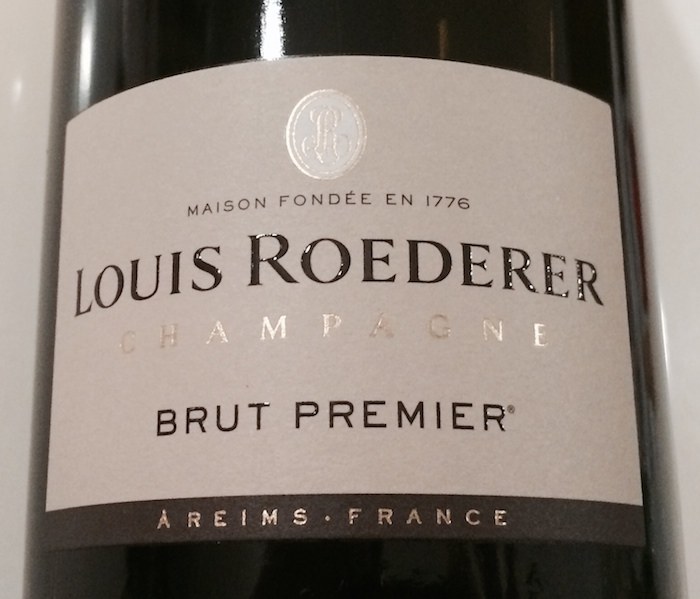
Louis Roederer
Well, if you hadn't made your choice yet, you might see it a little clearer... At least I hope!
As for the special Champagne menu, simply follow your tastes and desires and it will necessarily be successful!
Happy holidays to everyone!
Julien Diaz 🙂
And to play a little: do you know what a Champagne capsule collector is called?


a lire
Conseil n•6 Faire confiance à son caviste indépendant !
En effet, avec un caviste on ne peut pas se tromper !!! Bonne fêtes à vous 🙂